Showing posts with label Travel Thailand. Show all posts

Thailand Beaches - How to Discovering Hidden Beaches in Thailand


Thailand Beaches - How to Discovering Hidden Beaches in Thailand
By : Brian Lawson

There are a million reasons to visit Thailand, such as the tropical rainforest's of the north, the Bridge over the River Kwai to the west in Kanchanaburi or the soft white sand of the beaches to the south to name a few. Many travelers who head south are searching for a perfect paradise, a place with deserted beaches fringed by green palm trees and soft white sand to bury their toes into. The reality however is they will end up on a beach just as packed with tourists as their flight was there.

In southern Thailand you can find many beaches. Some will be packed with tourists, jet skies and banana boat rides while others will be hidden paradise. Now if you want the jet skies and banana boats then things are easy but if you seek out that little corner of paradise then you need to do a little more work. Holiday planning should be the most essential part of any holiday and it should entail more than a visit to your local travel agent to pick up some brochures.

Here I have listed outlined 7 points that I belief help in finding those hidden beaches in Thailand.

7 Points To Great Holiday Research Decided on what type of holiday you want, beach, city or forest break. If you want a combination of these then do the following 6 steps for each destination.

Note down 5 phrases or words that come to mind when you think about your chosen destination.

Put these phrases into Google or any other search engine you may use and have a look at the first page results, then ignore them.

Move to page 2 and 3 and working your way down ignore hotel booking services and visit the web sites that seem like information pages and have some relevance to your searched term or phrase.

Look for locations on these web pages that maybe you have never heard about or read about and take a note of the name.

Search for this unknown location and take note of the number of pages with the term.


The location with the least number of pages should now be your focus for your next holiday destination.The Steps In Action:

Just in case you are not aware, I'm in love with Thailand beaches. When i think about them I get images of white sand, palm trees, blue waters, cool breeze and deserted beaches. I put these terms into my chosen search engine, Google for me, and here is what i find .

White sand Thailand returns 2.35 million results moving on to page 2 I ignore hotel booking service sites and see about half way down the page Amazing-Thailand.com - Tropicals Islands in Thailand a quick scan produces two possible locations, Koh Larn and Koh Turatao. The later returns 1,380 results and Koh Larn shows 55,400 pages. I now have my first holiday research place, Koh Turatao.

A word of warning about finding deserted beaches. These areas will often be far from any commercial outlets, medical centers or English speaking locals. This can be paradise when things go good but if the unthinkable happens and you take ill or get injured finding help can be a difficult task, just remember this before you head off into the unknown.

Finally, I would like to ask that in your research you do come across that perfect paradise then please keep it to yourself. There has been many paradise locations spoiled after someone has found it then wrote a post on some travel forums about their experience. Let others find hidden treasures, it really can make for the best possible holiday ever.

Brian is the author of [http://www.thailandscubatours.co.uk]Thailand Scuba Tours blog and provides information about how and when to [http://www.thailandscubatours.co.uk/category/thailand-locations]travel Thailand With some information of traveling with children and scuba diving in Thailand there should be something for everyone.

Article Source: http://EzineArticles.com/?expert=Brian_Lawson
http://EzineArticles.com/?Thailand-Beaches---How-to-Discovering-Hidden-Beaches-in-Thailand&id=1263316

Read More...

Travel Thailand: A Farang Fashion Faux Pas

Travel Thailand: A Farang Fashion Faux Pas
By : Jane Arnold

I arrived in Bankok in April, knowing it would be hot, but was knocked out by the average 106° weather. After a chaotic trip to my guesthouse, through the most amazing traffic, I collapsed on the bed in nothing but my birthday suit. Prior to arriving in Thailand, I had researched what to pack. I wanted to bring comfortable clothing, but also pieces that would be appropriate for the various wats or temples I planned to visit.

To Thais, being sabai jai means having a contented heart, referring to a calm disposition. Foreigners or farang are thought to behave in a contradictory manner, being easily frustrated and exhibiting a quick temper or jai rawn.
I promised myself that I would blend in to my new surroundings and maintain an inward tranquility so prized in the Land of Smiles.

On my second day in Bankok I was headed to the former Thai capital Ayutthaya and the Royal summer palace, Bang Pa-In. Forgetting all of my carefully selected couture, I threw on the coolest pieces I had. Dressed in a sleeveless tank and black cotton skirt that hit above my knee, off I went. That was the end of my inner and outer tranquility.

As soon as I stepped on the bus, I became acutely aware that I had forgotten the dress code, but it was too late. My seatmate was an impeccably dressed British woman who looked appalled by my very presence. She avoided conversation and eye contact with me, and we rode to Ayutthaya in silence.

Unable to fully enjoy the Buddha statues and architecture that spanned centuries, I was consumed by the thought that I was offending past and present Thais. I was especially distracted when all my bare bits were in the company of monks. Overheated, sweaty and blotchy red, we headed to our next stop, Bang Pa-In the colonial-style summer digs for the Royal Family. We were told that clothing would be provided to cover knees and shoulders if we weren’t dressed appropriately. I should have taken the offer. Instead I looked in my bag and grabbed a black sundress that I had stashed at the last minute. A frilly flamenco looking number, I looked ready for the stage than a stroll through a revered Thai attraction.

I was pleased with my find, and our Thai guide, always polite, said I looked fine. Off I went, and perhaps overly confident due to my modest attire, instead of opting for the covered golf carts, I joined the rest of the walking tour. I now understood how asphalt feels in the blistering sun. Trying to stay conscious, every so often I would sneak into a stream of water coming out of the sprinklers to keep the expertly manicure lawn looking green. How I envied that lawn.


Eventually I had to retreat from the walking tour and seek some shade. I looked up and saw two chic young Thai women in jeans and cardigans under a lovely umbrella. They were pointing and giggling. I must have looked a site, a large overheated, beet red woman in a formal black dress. I found out later that like Western culture, black is worn for funerals and can be considered bad luck. It was certainly bad luck for me.

I had become the traveler I vowed not to be, but now I knew better. The next day, wearing modest attire, I smugly hopped off the water taxi and headed for the gates of the Grand Palace complex. Unexpectedly, the clothing police directed me to a long line up of farang waiting to enter a small white building. On my turn a woman handed me a pair of socks. I put on the socks, slipped my sandals on and away I went. I walked toward the inner entrance of the Grand Palace but guards stopped me again, pointed at my feet, and gestured back the way I came. I wheeled around and was starting to get impatient, hot and frustrated. My jai rawn was showing up already, my second day in Thailand! As I trundled back in the hot sun, I watched smiling, perfectly poised Thai women dressed head to toe in warm looking clothing. I was so envious of their composure!

Back at the trailer, the attendants looked apologetic and handed me a pair of sport sandals. By the time I made it back to the entrance, I was sweating in the socks, long pants and modest shirt. After a few minutes I was again starting to overheat. I clicked a few photos and rushed towards the wrong exit. At first I thought I wouldn’t be let out, but when I kept exclaiming “mai sabai” the guards knew I wasn’t well and quickly let me pass. Embarrassed, I revived myself with ice cream and water.

Eventually, I began to adapt. Once I simply stopped to watch how Thais dealt with the heat, instead of trying to recall what I had read, I caught on to loose cotton clothing, and was much more savvy about sun exposure. In Thailand, the state of tranquility or sabai jai transcends physical appearances. It is intertwined with religion and philosophy, and to think I could attain something so intangible overnight was ridiculous. I needed to release the hold on what I thought I knew, in order to find my contented heart.

10 Ways to Beat the Heat in Thailand:

It’s hot in Thailand all year round, but if you’re affected by extreme heat here are some things to consider when visiting the Land of Smiles:

1. Although Songkran or Thai New Year is fun to experience, you may want to avoid Thailand in April. It’s the warmest time of year, with little escape from the blistering sun. I had to miss certain attractions in Bangkok because I simply couldn’t function in the extreme heat.

2. Keep hydrated. Buy lots of bottled water and be diligent about replenishing every hour.

3. Bring hydration packets with you. I met a woman from California who gave me this tip for my next trip to Thailand. You can pick up these packets at sports stores or drugstores and are usually used by athletes.

4. Make sure to bring loose, light colored clothing made from natural fibers like linen or cotton. Sport sandals are a must if you plan on visiting the Grand Palace in Bangkok, as well as a few modest pieces to cover shoulders and knees.

5. As soon as you arrive, buy an umbrella to keep the sun off. They’re cheap and work well to keep you shaded. They look pretty too!

6. Stay near or on the water. The Chao Praya River in Bangkok, or escape to an island. It’s much cooler.

7. Avoid too much sun and wear sun block. If you do get a sunburn, try a first aid vitamin E ointment. It worked wonders on my burned shoulders.

8. Wear a hat if you don’t plan on using an umbrella.

9. Get up with the monks and do most of your sightseeing early in the morning.

10. Enjoy the spicy and delicious Thai food! The spice tends to make to salivate and perspire which cools you off and quenches your thirst.

Jane Arnold is a freelance writer and travel buff. She has spent time in Europe and North America, and most recently traveled to South East Asia. You can read more of her travel stories at http://www.girlyside.com/girlyside.html
The website is a girl's guide to health, beauty, love and leisure. Sign up for the free newsletter at http://www.girlyside.com/newsletter.html

Article Source: http://EzineArticles.com/?expert=Jane_Arnold http://EzineArticles.com/?Travel-Thailand:-A-Farang-Fashion-Faux-Pas&id=21095

Read More...

Frugal Travel Tips For Bangkok, Thailand


Frugal Travel Tips For Bangkok, Thailand
By : Kimber Chin

With the currency exchange, it is difficult not to find frugal attractions in Bangkok, Thailand. However, there are a few tips to make travel dollars stretch even further and to better the travel experience.

The Grand Palace And The Temple Of The Emerald Buddha

Yes, there is an entrance fee (200 Baht, roughly $6 U.S.) but this sight is a must see for any visitor to Bangkok. It hosts a range of Thai architecture.

Temples and other national monuments have a strict dress code. No shorts, sleeveless tops, or risqué dress. This is true of most religious places the world over but in Thailand, travelers should also not wear open heeled sandals (there must be a strap behind the heel).

Thai Customs

Which leads to some Thai customs that savvy travelers observe.

Shorts are considered appropriate only for children and the lower class.

The head is considered sacred (closest to the heavens) so do not touch. Actually try not to touch the locals at all.

Feet are also to be treated with care. To point your feet at a person is considered a grave insult and to sit with soles exposed extremely rude (especially in religious places). Sit with feet tucked under the body.

No public displays of affection. Keep that for the privacy of your room.

As with most countries, but especially Thailand, do not criticize the local government or monarchy.


This may seem like a lot of rules but most apply to almost every country a traveler is a guest in.
Also the Thai people are extremely polite so they are unlikely to express their disapproval.

Chatuchak Park Weekend Market

This is where frugal travelers buy their souvenirs. With over 15,000 stalls (pick up a free map at information kiosks), there is plenty to choose from. This is a place to haggle. Never take the first offer. Also be very wary of fakes (fake antiques, fake jewelry, etc) and of pickpockets (keep some small bills in an easily accessible pocket and hide the wallet away).

What to buy? Almost anything, especially handicrafts. My mother is an elephant lover and Thailand, with reverence of the animal, was the ideal place to pick up teak carvings (be careful of wood drying and cracking when you return home).

Wat Pho (Temple Of The Reclining Buddha)

With another very, very inexpensive entrance fee (20 Baht), Wat Pho is the largest and oldest Buddhist Temple in Bangkok. The highlight is, of course, the 46 meter long, gold covered Reclining Buddha. However, the buildings and I found the orchids were also noteworthy.

Bangkok is a bargain hunters paradise. Attractions, dining and shopping is inexpensive.

For more frugal travel tips on Bangkok or other cities, visit http://www.freephotooftheday.com

Article Source: http://EzineArticles.com/?expert=Kimber_Chin http://EzineArticles.com/?Frugal-Travel-Tips-For-Bangkok,-Thailand&id=700690

Read More...

Bangkok

Bangkok

bangkok_02
Bangkok was founded in 1782 by the first monarch of the present Chakri dynasty.  It is now the country's spiritual, cultural, diplomatic, commercial and educational hub.  It covers an area of more than 1,500 square kilometres, and it is home to approximatlely ten million people or more than 10% of the country's population.
Over the last few decades, Thailand's capital city, Bangkok, has changed into a modern, exciting and sophisticated city.  It offers to visitors not only the cosmopolitan amenities they would expect from other big cities, but also a unique treasure trove of cultural attractions.  Thailand, in the heart of Southeast Asia, was never colonised and thus kept its unique culture and heritage intact. Bangkok offers visitors the opportunity to experience fascinating glimpse of Thailand's gentle culture amidst the bustle of a great and dynamic metropolis.  This great city has had astounding success in combining the ancient and modern world.

bangkok_01
For tourists, Bangkok has a feast of attractions to offer.  The city is dotted with 400 glittering Buddhist temples of great beauty and fascination, magnificent palaces, classical dance extravaganzas, numerous shopping centres and traditional ways of life, especially along the "Venice of the East" timeless canals and the Chao Phraya River of the "River of Kings" winding through the city.  It is worth taking a trip along its waters before exploring further into different canals to take a glimpse of old Bangkok.

Read More...

Phra Nakhon Si Ayutthaya

Phra Nakhon Si Ayutthaya

Phra Nakhon Si Ayutthaya

The Phra Nakhon Si Ayutthaya or Ayutthaya in short, is one of Thailand's historical and majestic highlights. Serving as the Thai capital for 417 years (1350 1767: Kingdom of Ayutthaya), it was once glorified as one of the biggest cities in Southeast Asia. During the 17th century, most foreign visitors to Ayutthaya, traders or diplomats alike, claimed Ayutthaya to be the most illustrious and glittering city that they had ever visited. The map of Ayutthaya published in 1691 by Simon de la Loubere in Du Royaume De Siam is proof of such recognition.

The Kingdom of Ayutthaya reached its apex in terms of sovereignty, military might, wealth, culture, and international commerce in the 16th century when the Kingdoms territory was extended far beyond present-day Laos, Cambodia, and Myanmar. Ayutthaya even had diplomatic relations with Louis XIV of France and was courted by Dutch, Portuguese, English, Chinese and Japanese merchants.

Visitors can explore and appreciate Thai history in Phra Nakhon Si Ayutthaya, which is situated only 86 kilometers north of Bangkok. Visitors to Ayutthaya can marvel at its grandeur reflected through numerous magnificent structures and ruins concentrated in and around the city island surrounded by Maenam Chao Phraya, Maenam Pa Sak and Maenam Lopburi.

More importantly,Phra Nakhon Si Ayutthaya Historical Park, an extensive historical site in the heart of Ayutthaya city, has been included in UNESCO's World Heritage list since 13 December, 1991.

The Past

The Kingdom of Ayutthaya was built and developed in leaps and bounds. The ruins in Ayutthaya that survived the test of time embody both the glorious and ignominious stories of the Kingdom.

Phra Nakhon Si Ayutthaya

This ancient capital of the Kingdom of Ayutthaya, founded in 1350 by King U-Thong, had thirty three kings of different dynasties and reached its peak in the middle of the18th century. A magnificent city with three palaces and over 400 magnificent temples on an island threaded by canals Ayutthaya was truly an impressive city that attracted both Europeans and Asians. After a 15-month siege the Kingdom of Ayutthaya was conquered and completely destroyed by the Burmese in 1767. When King Taksin the Great finally liberated the Kingdom, a new dynasty was established and the capital was moved to Thonburi.

The seal of Ayutthaya depicts a conch on a pedestal tray placed in a small castle under a Mun tree. According to legend, King U-Thong, founder of the Kingdom of Ayutthaya, discovered a beautiful conch buried in the ground being prepared for the establishment of the seat of his Kingdom. Consequently, he had a tiny castle built to house the shell. Hence, the provincial seal.

The Present
Phra Nakhon Si Ayutthaya

Today, there are but groups of crumbling ruins and rows of headless Buddhas where once an empire thrived. The temple compounds are still awe-inspiring even in disrepair and a visit here is memorable and a good beginning for those drawn to the relics of history.

The architecture of Ayutthaya is a fascinating mix of Khmer (ancient Cambodian style) and early Sukhothai style. Some cactus-shaped obelisks, called prangs, denote Khmer influence and look something like the famous towers of Angkor Wat. The more pointed stupas are ascribed to the Sukhothai influence. For new arrivals who had limited their visit to Bangkok, similarities may be noted with the riverside Wat Arun, an 18th-century structure that was built in the so-called Ayutthaya style, a melding of Sukhothai Buddhist influences and Hindu-inspired Khmer motifs.

Ayutthaya is administratively divided into 16 districts: Phra Nakhon Si Ayutthaya, Ban Phraek, Bang Ban, Bang Pahan, Bang Pa-in, Amphoe Bang Sai, Bang Sai, Lat Bua Luang, Maha Rat, Nakhon Luang, Phachi, Phak-Hai, Sena, Tha Rua, Uthai and Wang Noi.

Read More...

Ang Thong Province

Ang Thong, a province, which is luxurious of native handicraft like, molded court dolls, firebrick, and wickerwork.  It is also the origination of Li Ke, the native folk song, hometown of Nai Dok and Nai Thongkaeo, the two heroes during Bang Rachan Battle.  Ang Thong is also abundant with more than 200 clean, magnificent, and interesting temples, most appropriate for Thai chronological study.

Province Ang Thong

Ang Thong, originally known as Mueang Wiset Chai Chan, is located on the Noi River and the low-lying land of Chao Phraya River.  It is an essential frontier outpost of Ayutthaya when fighting with the Burmese.  As appeared in several parts of Ayutthaya chronicles, especially, prior to the defeat of Ayutthaya in 1767, the Burmese encamped at Mueang Wiset Chai Chan to attack Ayutthaya causing Bang Rachan Battle, a noted event recorded in Thai history.  Later during the Thonburi era, Mueang Wiset Chai Chan was moved to a new site on the left bank of the Chao Phraya River at Ban Bangkaeo and was named Ang Thong since its location was a fertile basin similar to a water and rice bowl of the country.

Province Ang Thong

Ang Thong is a small province located at the lower part of central Thailand as large as 968 square kilometers. Topographically, almost all of the Ang Thong area is low plain with two important rivers crossing the province, i.e. Noi River and Chao Phraya River. Ang Thong is administratively divided into 7 Amphoes: Amphoe Mueang Ang Thong, Amphoe Wiset Chai Chan, Amphoe Sawaeng Ha, Amphoe Pa Mok, Amphoe Pho Thong, Amphoe Chaiyo, and Amphoe Samko. Borders are Sing Buri to the north, Ayutthaya to the south, Ayutthaya and Lop Buri to the east and Suphan Buri to the west.

Read More...

Thailand - An Extreme Travel Experience - Filipinos in Thailand

Thailand - An Extreme Travel Experience - Filipinos in Thailand
By : Hedda Tan

When Bangkok residents and those in neighboring provinces like Ayutthaya, Hua Hin and Ratchaburi were gearing up for the hottest season in Thailand, 6 young, adventurous Pinoys set out from Manila to fulfill part of their goal – to tour the whole of South East Asia. Their destination? Thailand!

But little did they know it’s going to be more than just a taste of the spiciest meal they’ve ever had in their life, or that it’s going to be more than just a beach experience. Here is a story of six friends who came to Thailand for the first time. Their experiences have been so much more than they hoped and planned for, and how they did it would be something you could learn from if you yourself plans to travel Thailand.

Mark, Vangie, Hencel, Hil, Jeff and Sheryll thought they have done all the research they could lay their hands on to arm them with all that they needed for their Thailand trip. But although they did see parts of Thailand they expected,

nothing prepared them for the scorching, energy-draining heat Thailand is famous for especially in the months of March and April.

“Umaga pa lang, mainit na” (in the morning, it’s already hot), the group was saying. And that had an impact on their sight seeing plans. They wanted to do more and see more, but the heat was just too much so they had to catch up on some sleep their first couple of days to have the energy to tackle Bangkok streets thereafter.

Nonetheless, those first couple of days, they experienced the historical architecture of Ayutthaya – Thailand’s capital before the Thais moved it to Bangkok, also known as Krungthep in the local language. They also had a taste of Thailand waters and sand in tranquil Hua Hin, which is the King’s choice of residence for the summer season. Though they didn’t have a chance to bump into royalty while there, they were not the least disappointed. They had a chance to see and experience parts of Thailand other than Bangkok even though it’s only their first time to travel Thailand.

The morning after their travels in Ayutthaya and Hua Hin, we met the Pinoy travelers at Wat Pho (the Temple of the Reclining Buddha), and took them to the ever famous Floating Market in Damnoen [http://www.siampinoy.com/thailand-travel/damnern-saduak-floating-market-and-rose-garden-2.html ] Saduak.

While having a picturesque moment watching the array of Thai fruits, food and crafts along what is known to some as the ‘Venice of the East’, the group had some regular Thai noodles (bam-i nam) and enjoyed sticky rice topped with ripe mango (kaw niew ma muang) and the cheap, yet very fresh fruits being sold along the khlong (canal). The sellers were cramped with their goods in narrow wooden boats. Not much time to haggle there for customers, lest the boat with the goods you have your eyes on gets swept by other boats.

And of course, the adventure wouldn’t be complete without the boat ride along the khlong (canal).

But the most unforgettable experiences the group had came in contrasts. Nearly at the end of their Thailand travels, the group visited the Grand Palace. There, they were awed by the intricacy of the Thais’ handiwork on the walls of the temples.

Literally everything spelled “majestic”, and they wondered whether the bright colors and the intricate work are true for all Buddhists or is it only in Thailand.

Apart from the grandiosity of the palaces and temples, the Thais’ reverence for their King also made a great impression on the group. To them, it’s amazing that despite the apparent modern technology in Thailand, people still have a deep respect for and that they still follow their King.

That same night, the group had an 180-degree turn when their travels took them to yet another infamous place to visit in Thailand – Patpong! There they saw another side of Bangkok that is equally amazing but in a totally different way. Though they had a forewarning that they might meet quite aggressive people who would try to convince them they have the best “pingpong” show that side of the city, nothing prepared them for the real experience.


“They really force you to buy their wares”, was one of the comments from the group. “Nakakatakot yung inaapproach ka nila tapos hindi ka nila talaga titigilan.Tsaka hindi ko ininom yung soda (when we watched the show), kasi natatakot ako kung ano yung nakalagay doon”

it’s scary when they approach you and they don’t easily let you go. And I didn’t drink the soda because it’s scary to think what could be in it), was yet another member’s memory of the group’s Patpong experience.

What was unexpected by the group was how the women who worked in Patpong reacted to their work situation: “Nakakagulat sa kanila, parang wala lang” (What was surprising was that it seemed like nothing to them). “In fact, nagtatawanan sila (they were laughing). Parang they don’t see it as work na; just something natural. They don’t see anything wrong about it”.

Before the group came for this trip, they heard many stories about Thailand. Surprisingly though, not much was told about Patpong. Many of the stories the group read in blogs and heard about Thailand were scary, but they’ve found out, they’re not all true. One of them says, just be practical. Have the common sense to take the same precautions sensible travelers would take in any country they visit for the first time.

The group also advises, “Do not limit yourself to Bangkok. Thailand is not beaches. Thailand is not Patpong. Thailand is not temples. Thailand is everything!”

And because of that, this group of 6 friends vows to come back. There is yet more to Thailand that they have not experienced. Next time, they would like to go south and explore the island beaches like Krabi and Phuket. They might also go north where the long-neck tribe and the like lives, and where the climate is so much more forgiving especially for travelers.

In the Philippines the group has also seen many beautiful places. And their Thailand experience has only enhanced whatever is good and beautiful about our country.

And that is one message they would like to convey to others back home: to go places beyond the 7,107 islands (or more) of the Philippines. The purpose is not to promote tourism in other countries, but for Pinoys to appreciate what is good about our own. And that is one message they would like to convey to others back home: to go places beyond the 7,107 islands (or more) of the Philippines. The purpose is not to promote tourism in other countries, but for Pinoys to appreciate what is good about our own. This way people will have a better understanding of what works in our country and what does not. From there, it would be easier to correct our mistakes because we will have tangible points of comparison.

As the group leaves Thailand with thought provoking memories, they have this to say to Siam Pinoy, “Thank you sa experience sa Thailand. Yung hospitality, hindi namin expected. Pumunta na kami sa ibang lugar na may kakilala pa kami (we’ve already gone to places where we even know people). But here, we don’t even know you, you don’t know us. Yet you spent time for us.”

For us in Siam Pinoy, it has been a pleasure. It’s not everyday we meet like-minded people. And for those adventurous spirits left back home who plan to unleash themselves in Thailand, here’s their piece of advice, “Prepare themselves. Keep an open mind. Ang Thailand, hindi mo right away mahal, e (you don’t get to love it right away). But it grows on you. And when they get here, respeto lang sa kultura nila” (just respect their culture).

The Venice of the East As the group of 6 friends go back to their different lives in Manila, they will always have their extreme experiences of Thailand to look back to. A part of them would remember the ‘cigarette-smoking’ and ‘pingpong’ ladies of the Thailand nightlife who sell entertainment of another kind.

Another part of the group would look back with awe and wonder at the nationalism of a people and the love they have for their King and country. And that national pride is the part of them, which gives rise to those majestic and intricately decorated temples and palaces Thailand is known for the world over. But for one thing, they are a more proud group of Filipino travelers, appreciating more what is Philippines after learning and experiencing what lies beyond our borders.

Hedda Joy Tady-Tan is an international School Teacher in Thailand.
She is also the Editor in Chief of SiamPinoy.com - The Filipino Expats Community in Thailand Online. http://www.siampinoy.com/

Article Source: http://EzineArticles.com/?expert=Hedda_Tan http://EzineArticles.com/?Thailand---An-Extreme-Travel-Experience---Filipinos-in-Thailand&id=536886

Read More...
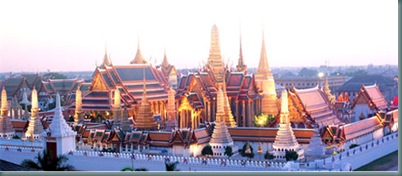
Songkran in Best Travel Thailand

Songkran Festival 2008's Announcement

The Great Songkran Day this year is falling on Sunday 13 April 2008, corresponding the Year of Mouse. Its symbolic is a Deva of water element nature, before B.E. 1370, intercalary month in Lunar Calendar and the extra day added in February every four years.

Songkran Queen is name Tungsatevee, wearing bangle and pomegranate flower, red dress, preferred wild fruit, the right hand holding Chakra and the left hand is holding a shell, sitting on the back of garuda.

The Great Songkran Day this year is falling on Sunday 13 April 2008 at 18.24hours. Changed from before B.E. 1370 on 14 April 2008 at 22.53.24 hours.

In this year, Sunday is the “Thongchai or Lucky Day”, Monday is “Athibordi Day”, Saturday is “Ubat or Bad Luck Day”, Wednesday is “Lokawinat or Destructive Day”. Since Songkran in this year is falling on Saturday, it shall inspire raining 400 ha (the word to call the shower of the rain) as divided as 40 ha in human world; 80 ha in the oceans; 120 ha in Himmabhan Forest; 160 ha in Chakkrawan Mountain. There were 6 Naga spraying water, the prediction about food is called “papa” the rice paddy in the farm shall be 1 part productive and 9 parts destroyed and there shall have appropriate water.

From the above announcement of Songkran if we compare with ancient prediction, it is noticeable that Sonkran in this year is falling on Saturday, it is said that there shall have lot of theft, severe sickness, and, as the first day of Aries is falling on Sunday, it is predicted that the rice shall be died, lot of foreigner entering the country, the senior shall be in worrisome. In Lanna concept it is predicted that there shall lack of rain, the plants shall be seriously destroyed by insets, serious fire, expensive goods, all are as worse as current prediction. For Songkran Queen named Mahthon Thevi is sound quite terrible since in addition to carrying Chakra and Trident but she also eat meat and bear water hyacinth above her ear, wear black sapphire. Some may feel unhappy after reading those above story but should we deeply consider that Songkran is falling on Saturday which in Astrology is considered as the great trouble day that full of bad luck but Saturday is the strong day, having “Naga-Prok” Style Buddha Image as the symbol of the day which can be interpreted that the Naga has spread their heads to protect all human beings from all bad luck and it is believed that this style of Buddha is full of sacred in mercy as from the legend, it was told that even the Naga also appeared from the water to protect the Buddha based on the power of his kindness. It is to directly indicate peoples to use mercy and merit in spending their life regardless in the family, social and national level. Chakra is the weapon of Narayana as used to get rid of troublesome of the world while Trident is the weapon of Siva the great holy who gives special blessings to peopled of good conduct. Black sapphire can make the wearer to have cool-mind, can prevent dangerous from ghost, brings strength, good luck and richness. It is noticeable that even Songkrang Queen is coming to the world at inappropriate time but her weapon and ornament indicate lucky meaning because they can be used to get rid of enemy. Regardless what is the prediction in the past or in presence, if we use the best care in living, then we shall be able to welcome “Songkran – Thai New Year” with happiness and confidence of the future.

Prediction about the Great Songkran Day, the first day of Aries and New Year Celebration Day.


  1. In case of Songkran day is falling on Sunday, the plant shall give inappropriate productivity. In case of the first day of Aries is falling on Sunday, the rice shall be died, lot of foreigners entering the country, the senior shall be falling in worrisome. Should the New Year Celebration is falling on Sunday, the King shall have great power to eliminate all enemies from all directions.
  2. In case of Sonkran day is falling on Monday, the senior government officers and their ladies shall have great power. Should the first day of Aries is falling on Monday, there shall have sickness and expensive salt. Should the New Year Celebration is falling on Monday, the queen and her lady-in-waiting shall be happy.
  3. In case of Songkran day is falling on Tuesday, there shall have lot of thefts, serious sickness. Should the first day of Aries is falling on Tuesday, all fruits shall be expensive. Should the New Year Celebration is falling on Tuesday, all civil servant shall be happy and overcome the enemies.
  4. In case of Songkran day is falling on Wednesday, the senior government officers shall be admired from international. Should the first day of Aries is falling on Wednesday, all foods shall be expensive, the widowed woman shall loss her residence. Should the New Year Celebration is falling on Wednesday, all psychologist shall be happy.
  5. In case of Songkran day is falling on Thursday, the junior shall be loss his advantage to the senior and boss. Should the first day of Aries is falling on Thursday, fruits shall be expensive, the royal family shall be in worrisome. Should the New Year Celebration is falling on Thursday, all priests, nuns and Brahmins shall perform their good activities.
  6. In case of Songkran day is falling on Friday, there shall be rich with food and plant, heavy rain, strong storm, peoples shall be suffered from eyes disease and sick. Should the first of day of Aries is falling on Friday, chili shall be expensive, birds are suffered from disease, danger to the wild animals, the widow shall be lucky. Should the New Year Celebration Day is falling on Friday, the merchant and head of household shall have good luck in their business and earn lot of profit.
  7. In case of Songkran day is falling on Saturday, there shall have lot of thefts, serious sickness. Should the first day of Aries is falling on Saturday, foods shall be expensive, less rice product, expensive fruit, less water and fire in the center of the city, the nobleman shall be punished. Should the New Year Celebration Day if falling on Saturday, all soldiers shall win the enemies.

In addition, there are prediction of Lanna from other orthodox that if the Great Songkran Day is falling on Sunday, the Songkran Queen is Mrs. Paengsri, the affect is the rice in such year shall be very expensive, most peoples shall be suffered from diseases, enemy attack, rice and plant are destroyed by insects, uneven rains, the millionaire shall be lost, rubber tree is the great plant for other plants, the rice holy is remained at the bamboo tree.

On Monday, the Songkran Queen is Manora, in such year, there shall have lot of snakes, most peoples shall be suffered from diseases and most of bad luck, the rice holy is remained at Mai Dua Kliang.

On Tuesday, the Songkran Queen is Raksot Thevi, in such year there shall have good raining in the beginning and ending of the year but less raining in the middle of the year, destructive rice farm, less productivity of fruits, bad situation in the country, rice and plant are destroyed by insect, the rice holy is remained at Mai Oye Chang.

On Wednesday, the Songkran Queen is Mantha, in such year there shall have uneven rain, half productive and half destructive rice farm, expensive goods, bad luck for nobleman, the rice holy is remained at Mai Kram.

On Thursday, the Songkran Queen is Kanyathep, in such year there shall have regular rain according to the reason, the senior shall be in danger, lot of dead animal, the peoples are happily stay and good being while the nobleman and priest shall be in worrisome, the rice holy is remained at Bastard Teak.

On Friday, the Songkran Queen is Rintho, in such year there shall have good rain in the beginning of the year and lowered in the middle of the year, the plant and rice are destroyed, danger to the priest, the rice holy is remained at Mai Phuttha. On Saturday, the Songkran Queen is Sama Thevi, in such year there is lack of rain, the plants are destroyed by insect, great fire and expensive goods.

Read More...

THE SIGNIFICANCE OF SONGKRAN: ORIGINS OF THE FESTIVAL & THE CULTURAL VALUES BEHIND SONGKRAN

THE SIGNIFICANCE OF SONGKRAN: ORIGINS OF THE FESTIVAL & THE CULTURAL VALUES BEHIND SONGKRAN


Songkran Day has been celebrated as New Year's Day in the Thai solar calendar since ancient times. The date coincides with the day the sun leaves Pisces and enters Aries, usually falling on April 13 of each year.

The word "Songkran" means a passage or course and refers to the position of the sun within the solar system. As the sun enters each of the houses of the zodiac constellation, a songkran cycle is completed. Over time, the use of the term has become more generic and Songkran is more commonly associated with the period when the sun enters Aries, in April. During this time, the sun is equidistant to the earth so there are an equal number of hours during the day and night, a phenomenon known as "mahasongkran" (the supreme cycle). This marks the beginning of the Thai new year.

Songkran is celebrated over a 3-day period.


APRIL 13 - WAN SANGKHAN LHONG
"Sangkarn Lhong day" marks the end of an era. Various activities are undertaken to "send off" the outgoing year. In the morning, merit-making rituals are performed and offerings are made to the Buddhist monks. Spring-cleaning and personal cleansing are also part of this "renewal" process. Later in the day, Buddha images are bathed with lustral water in a gesture of respect. The religious ceremonies include a procession of Buddha images through the city streets offering an opportunity for residents of the community to take part in the bathing rites. An annual "Miss Songkran" parade and floral floats are part of the popular festivities held to greet the Thai new year.

APRIL 14 - WAN NAO OR WAN DA
On April 14, the position of the sun is mid-way between Pisces and Aries. "Wan nao" or "Wan da" is a day of preparation as family members gather to help prepare offerings for the monks for the next morning. The afternoon is spent carrying sand into the 'wats' or temples. This is considered to be an auspicious day when everyone sports a happy face and avoids uttering words deemed inauspicious or bad-tempered. Merit-making continues in the morning with offerings being made to Buddhist monks. The world-famous Songkran water-splashing festive fun takes place all day helping revellers to beat the summer heat. In the evening, sand is brought to the temples for the building of sand stupas which are then decorated with colourful flags and flowers. The practice reflects an ancient belief that when an individuals walks away from a temple, particles of sand from the temple grounds are inadvertently carried away on one's shoes or sandals. The building of sand stupas for the temple is seen to be a practical way of replacing the sand lost and a merit-making act through which blessings are earned.

APRIL 15 - WAN PHYA WAN
April 15 marks the Thai New Year. This is the most important day of the Songkran New Year celebrations. It is a day traditionally spent making merit and performing charitable acts such as presenting offerings to the monks and listening to sermons, sprinkling holy water on Buddha images and monks, propping up the sacred Bo tree in the temple grounds, and calling on elders to receive their blessings.


A bathing ritual is observed in which lustral water is poured over respected elders in a gesture of respect and reverence. The seeking of their blessing or forgiveness for past wrong-doing is also implied. Additionally it is believed that through these acts of merit-making, loved ones, long-departed are endowed with blessings and good fortune. Last but not least comes the water-splashing ceremony and other festivities which is the most fun-filled part of the celebrations.

The religious ceremonies and folk rituals associated with Songkran are principally performed to bring good luck and prosperity. The rituals are also acts of gratitude and indebtedness undertaken in the memory of those who have passed on to another world.

The Songkran activities that take place in various locations around the kingdom are culturally unique and reflect local beliefs and practices. Each offers varying elements of interest.


LANNA THAI SONGKRAN FESTIVAL IN CHIANG MAI APRIL 13 - 15, 2007
  • Wat Phra Singh Voramahaviharn Temple
  • Tha Phae Gate
  • Provincial Governor's residence
  • Around the city moat and at various other locations throughout the city of Chiang Mai

FESTIVAL HIGHLIGHTS AND ACTIVITIES
  • Phra Buddha Sihing procession
  • Buddha images bathing ritual
  • Merit-making activities and presentation of offerings to Buddhist monks
  • Lanna Thai cultural performances
  • Folk games
  • Sand-stupa building contest
  • Songkran water-splashing
One of the best places to experience Songkran is in Chiang Mai, where it is celebrated on a grand scale with a flavour uniquely and entirely its own, attracting visitors from far and wide.

This year the festivities, scheduled for April 13-15, 2007, are centred around the Wat Phra Singh Voramahaviharn Temple, in the vicinity of the Tha Phae Gate, the Provincial Governor's residence and around the city moat.
Devout Buddhists visit the temple for merit-making and to listen to sermons. Lustral water is sprinkled on sacred Buddha images, such as the Phra Buddha Sihing image, and also poured over the hands of monks in a gesture of reverence. Donations are also made to the temple. Enjoy traditional Thai cultural performances held in the temple ground.

One of the highlights of the festival is the 'Songkran Beauty Queen Procession' that takes place on Songkran Day itself - April 13. Meanwhile, many other events leading up to the main attraction are spread over several days and it is here that the visitor gets to see various aspects of Chiang Mai, first hand, -- its culture, cuisine, arts and crafts, as well as the friendly people.


THE CULTURAL VALUES BEHIND SONGKRAN

The Cultural Values of the Songkran Festival are expressed through the various ceremonies and rituals. The meaningful aspects of Songkran are varied and culturally rich.

The first cultural value is "Thanksgiving" - The demonstration of gratitude and an expression of thanks to individuals who have have "done good" or shown goodwill and are worthy of respect and recognition.

Thanksgiving is demonstrated in ceremonial aspects of Songkran such as the bathing of Buddha statues with lustral water and the pouring of lustral water over the hands of elders and respected individuals, and other outward demonstration of respect.

The second cultural value is Loyalty to Ancestors. This is achieved through merit-making.

The third cultural value focuses on the an individual's sense of awareness of his/her responsibilities towards the family and home. It is demonstrated via the traditional custom of "spring cleaning".

The fourth value addresses the Value of Religion and highlights the well- defined roles and responsibilities of the "temples and monasteries" on the one hand and the community served by the religious institution.

Observance of this principle involves:
  • Community involvement in the spring-cleaning of temples
  • Meritmaking and offering food and alms to monks
  • The bathing of Buddha statues and monks
  • The construction of "chedis" or stupas and the decoration or beautification of temple surroundings
The fifth value is "Acts of kindness and generosity" towards others or Doing good for others".
This is demonstrated by the preparation, exchange and sharing of food and desserts by members of the community and the sprinkling of water on each other. This is a gesture of hospitality shown as individuals attempt to "cool" each other off in the intense summer heat.

The sixth value is the Spirit of Co-Operation and Community Spirit demonstrated through the enthusiastic participation of individuals of demonstrated through the enthusiastic participation of individuals of the community in Songkran festivities, sharing in the fun, spreading happiness and goodwill to all.

The morning of Songkran Day begins with merit-making according to local customs and traditions. Younger folks make their way to show their respect and seek the blessings of elders and individuals of seniority by making offerings. The ritual which accompanies this show of respect is highly elaborate. Deep respect and reverence is shown to the highest institution of the Kingdom - the monarchy and members of the royal family, learned individuals in particular those who are "teachers" the providers of knowledge to students and elders recognised for their worldly experience and wisdom.

This gesture of respect manifests itself in the form of a colourful and vibrant procession. This is Songkran and not a moment's "sanuk" is to be missed. Bright colours, song and dance and festive fun is the order of the day.

Once the ceremonial gesture of respect has been shown and the good-spirited water-throwing is over, everyone returns home to "freshen up" and prepare for the evening's celebrations which consists of various performances and forms of entertainment. Not to be missed is the "Ram Wong" Thai folk dance. The "Ram Wong" enables everyone to join in the fun.

Read More...